Research / Chemistry across worlds
How does life become possible?
Earth gives us the only known example of life taking hold on a planet. I study how its chemistry may have begun and what those origins can teach us about life’s possibilities elsewhere. My first few projects explore Venus’s sulfuric-acid clouds and Titan’s temporary melt pools.
Research projects
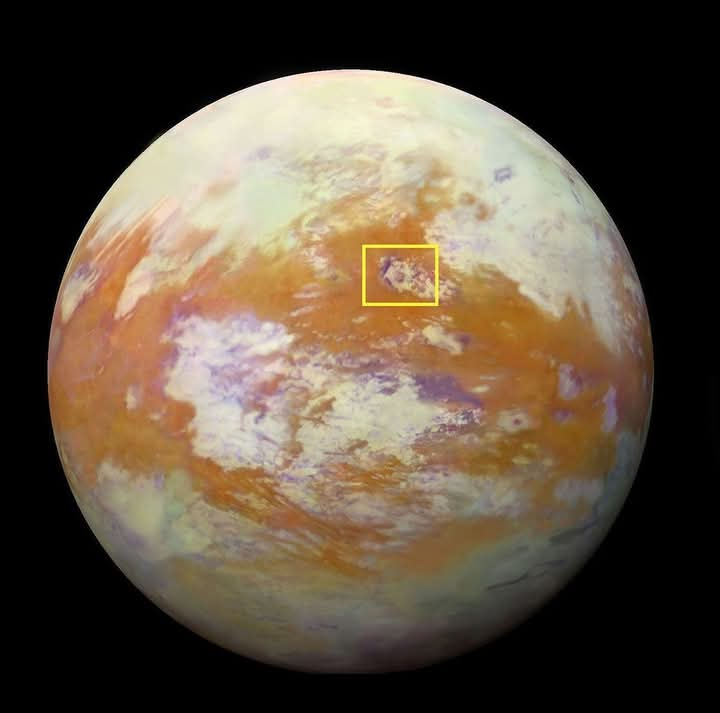 Titan
Saturn’s largest moon
Could a temporary melt pool help assemble life’s ingredients?
An impact can briefly turn Titan’s icy surface into liquid water. I study what chemistry might become possible in that temporary window.
NASA / JPL / University of Arizona / CNRS / LPG. False-color composite; Selk crater is highlighted.
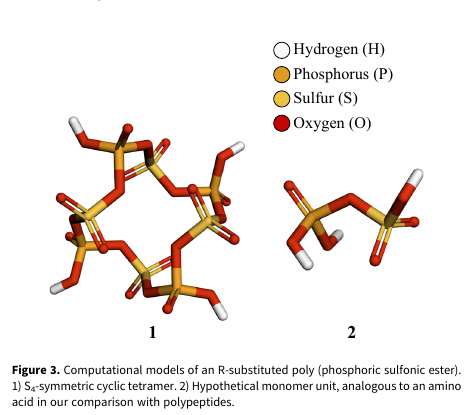 Venus
The clouds of our planetary neighbor
Could unfamiliar chemistry emerge in sulfuric-acid clouds?
Life on Earth gives us one chemical example. This study asks whether carbon-free polymer structures could be plausible in a very different planetary setting.
Madan et al. (2025), Figure 3, cropped. QRB Discovery. CC BY 4.0.
From possibility to a testable question
How I work
Model the chemistry
Use computational chemistry to test how life’s ingredients could form on Earth and other worlds.
Build useful workflows
Build tools that make chemical calculations easier to run, connect, and compare.
Make the work approachable
Turn papers into visual explanations, interactive experiences, and talks that invite people into the questions.
- 2026
Ishaan Madan & Ben K. D. Pearce · The Planetary Science Journal 7, 107
- 2025
Ishaan Madan & Ben K. D. Pearce · The Planetary Science Journal 6, 284
- 2025
Ishaan Madan, Shekoufeh Arabi Aliabadi, et al. · QRB Discovery 6, e23
All authors
Ishaan Madan, Shekoufeh Arabi Aliabadi, Johanna Huhtasaari, Ebba Matic, Emil Hogedal, Kinga Kamińska, Filip Nilsson, Axel Stark, Fernando Izquierdo-Ruiz, Hilda Sandström, Martin Rahm